
News
Be the first to know the latest news.
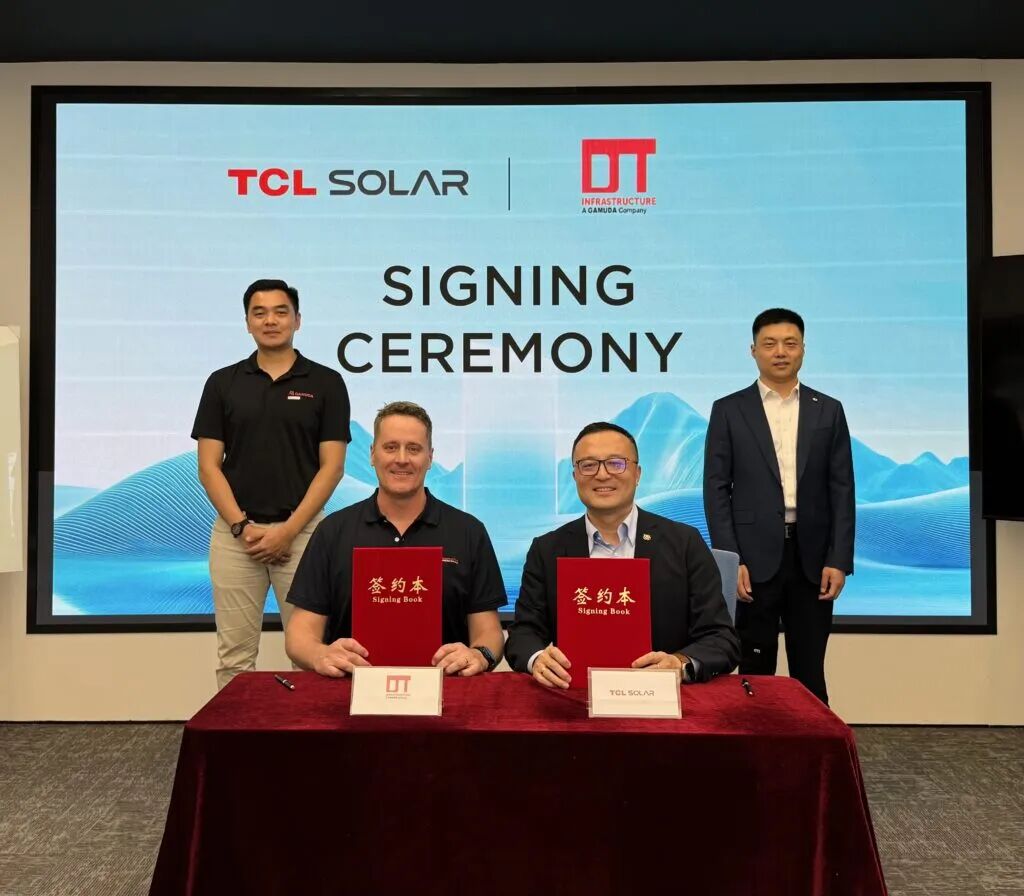
World’s Largest BC PV Project Secured! TCL Solar Awarded Australia Module Order
On July 29 in Melbourne, Australia, TCL Solar successfully secured a PV module order from DT Infrastructure (DTI) to supply the complete set of PV modules for two solar power plants—Smoky Creek and Guthrie’s Gap—developed by Edify Energy in Central Queensland, Australia. Construction and installation are expected to officially launch in early Q2 2027. With a total capacity of 720 MW, the project will set a new industry record upon completion as the world's largest utility-scale PV power plant utilizing Back Contact (BC) technology. The project will exclusively use TCL’s BC modules, which feature a maximum conversion efficiency of up to 24.2%, backed by a 15-year product warranty and a 30-year performance warranty. Frank Zhang, Director of SunPower Australia and President of International Business at TCL Solar’s Global Marketing Center, stated that securing this 720 MW mega-order marks not only a major development milestone for TCL Solar, but also a crucial breakthrough for BC technology in utility-scale solar applications. While BC technology has historically been used primarily in the premium residential market, this ultra-large project demonstrates that high-efficiency BC modules deliver exceptional product value in large-scale PV projects. Leveraging a mature local Australian team established in 2008 and full supply-chain support from TCL Zhonghuan’s headquarters, the team will ensure on-time module delivery and smooth project execution in close collaboration with DT Infrastructure. Adam Farquer, Project Director at DT Infrastructure, expressed high expectations for the partnership. He noted that executing large-scale renewable energy projects relies on supply chain collaboration and that this project serves as a prime demonstration model for applying high-efficiency BC technology to utility-scale plants. Both parties will work together to build a benchmark PV engineering project. Over the years, TCL SunPower has validated the large-scale application of BC technology through landmark projects, accumulating extensive global market experience. Previously, the 579 MW Solar Star PV plant in California, USA, and the 349 MW Limondale PV plant in Australia were both constructed using SunPower’s high-efficiency BC modules. At their respective commissioning times, they ranked as the largest PV power plants globally and in Australia, fully proving the feasibility and superiority of BC technology in utility-scale scenarios. Located in Central Queensland, the two power plants enjoy a strategic geographic location and form a highly representative mega renewable energy complex in Australia. Developed by Edify Energy, the project integrates large-scale PV power generation with advanced energy storage systems. Once fully operational, the project will generate an average of 1,589,000 MWh of clean electricity annually. This will help major local industrial users in Australia achieve their decarbonization goals, strengthen Queensland's low-carbon energy infrastructure, and accelerate the regional green energy transition. BC technology boasts over 40 years of continuous innovation and deep technological roots. Following TCL's completion of the SunPower integration in March 2025 and the formation of TCL SunPower, the group officially established a dual-brand module operation featuring TCL Solar and SunPower. As an industry pioneer in BC technology, SunPower has dedicated itself to R&D in high-efficiency BC tech since 1985, creating reliable and high-conversion PV products backed by vast core patents and technical expertise. Combined with TCL’s smart manufacturing capabilities, TCL Solar continues to drive the iterative upgrade of BC technology to meet the construction demands of utility-scale power plants. Parent company TCL Zhonghuan, a top-tier global PV leader, possesses a fully vertically integrated supply chain spanning silicon ingots, wafers, and modules. In 2024, its wafer production capacity ranked first globally, accounting for an 18.9% global market share, with over 4,600 specialized PV patents. Through strategic acquisitions of SunPower in 2025 and DAS Solar in 2026, TCL Zhonghuan has further solidified its leading position in the high-efficiency, premium BC PV sector.
2026.08.19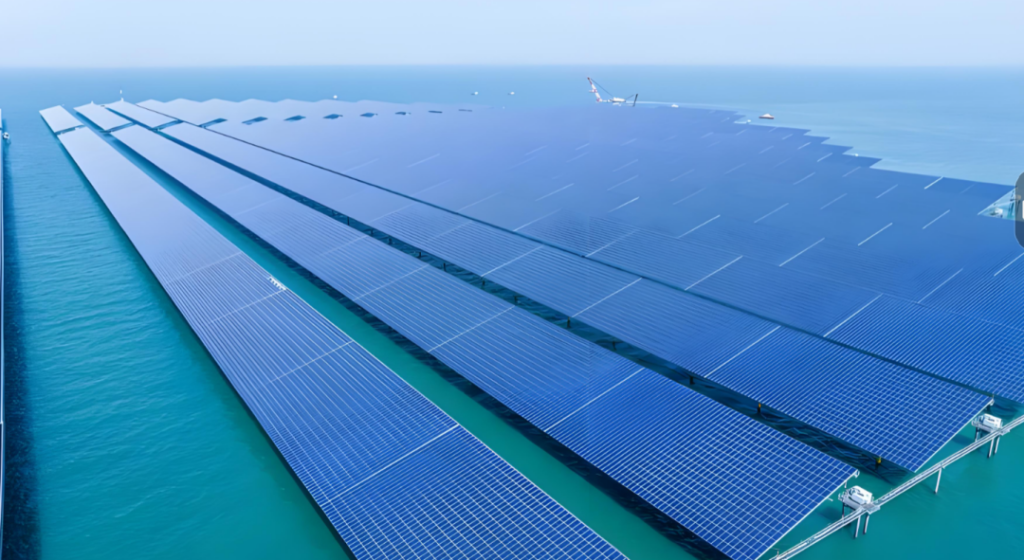
Fearless Against Super Typhoons! Brand-New Typhoon-Resistant PV Modules Officially Launched!
Every typhoon season, the reliability of photovoltaic (PV) power plants undergoes a ultimate test. Blown-over mounting structures, torn modules, perforations from flying debris... Behind these shocking images lie significant financial losses for power plant assets. As extreme weather becomes increasingly frequent, we must ask: Where is the bottom line for the reliability of PV power plants? The answer should not be passively enduring tests, but actively redefining standards. On August 6, Trina Solar officially released its Typhoon-Resistant Series PV Modules. By restructuring wind resistance capabilities across the entire link—from modules and connection structures to system components—Trina Solar delivers a hardcore solution for the industry to tackle extreme climates. Doubled Load Performance: Direct Confrontation with Extreme Typhoon Tests Many believe that wind resistance for PV systems relies solely on thickening mounting structures, increasing concrete ballast, and blindly piling on hardware. However, countless storm damage sites prove otherwise: wind force operates as a complete conduction system. Reinforcing only the backend mounting structure leaves the module itself as the weakest link in the system. When winds strike from above, the force first impacts the module backsheet. It is then dispersed by the frame, transferred to the mounting structure via clamps, and finally reaches the concrete foundation. If any single link lacks sufficient strength, the entire power plant will collapse in strong winds. Traditional modules typically feature a mechanical back load of only 2400 Pa, which used to be the industry's "passing mark." Yet under the impact of Category 14-15 typhoons, this threshold proves extremely fragile, often leading to micro-cracks and frame detachment. Trina Solar’s next-generation typhoon-resistant modules elevate this standard to 4500 Pa—nearly double that of conventional modules. This is not merely a numerical jump, but a complete rethinking of safety. We conduct strict static load tests at 1.05x the standard and dynamic load tests at 1.5x, ensuring modules remain rock-solid under severe conditions involving turbulence and dynamic sway. We do not offer "just-enough" compliance; we deliver safety margins that far exceed expectations. Mortise-and-Tenon Quick-Assembly Structure: Rooting Out Construction Hazards When reviewing over 90% of typhoon-related PV damage cases, misplaced clamps and loose fastening emerge as core human errors. Traditional universal clamps rely entirely on manual alignment by workers, resulting in vast discrepancies between novices and veterans. Even a misalignment of a few millimeters can cause slippage and loosening over years of wind vibration, causing imbalanced load distribution and total module fall-offs—a constant source of post-sales disputes. How can we eliminate safety hazards caused by poor construction? Trina Solar drew inspiration from ancient Chinese architectural wisdom, innovatively applying the mortise-and-tenon structure to module connections. Structurally, this creates a surface-contact sliding pair that unites modules, clamps, and mounting structures into a "synergistic anti-vibration system." For installation, it operates like building blocks—fast, convenient, and highly error-tolerant. Even with subtle installation deviations, the structure self-aligns automatically. Drawing on traditional mortise-and-tenon wisdom, Trina Solar engineered a patented slotted self-locking clamp system: Patented Quick-Assembly Clamp: Utilizes self-locking chamfers and special-shaped nuts to achieve precision engagement and mechanical self-locking between modules. This eliminates bolt loosening from long-term vibration and significantly boosts the wind and seismic resistance of the array. Elimination of Installation Misalignment: Precision slot matching between module frames and clamps enables a "plug-and-lock" mechanism. By removing alignment errors, this revolutionary design fundamentally resolves traditional pain points such as clamp displacement and fastening failure. 25% Efficiency Increase: Alongside enhanced reliability, installation time is reduced by 25%. Eliminating repetitive calibration steps achieves both safety and efficiency. By eliminating improper construction—the single largest safety vulnerability—EPCs benefit from both improved delivery efficiency and a drastic reduction in high post-sales costs associated with emergency repairs and compensation during typhoon season. System Synergy: Comprehensive Reinforcement for Ultimate Protection True reliability reveals itself in the relentless pursuit of every detail. Frame Reinforcement: The typhoon-resistant module frame is widened by 10% and thickened by 11%, substantially strengthening the critical load-bearing point at the crossbeam contact zone to ensure uniform load distribution. Glass Upgrade: The Typhoon-Resistant MAX Series utilizes a wave-pattern, anti-slip, fully thickened 2.5mm glass. Tested by authoritative third-party organizations, it withstands hail up to 75mm in diameter, upgrading impact resistance from "egg-sized" to "tennis-ball-sized" hail. Safety is the Highest Cost-Performance in PV Investments A stronger module requires a superior system to support it. Trina Solar understands that reliability is a system engineering effort. From high-strength aluminum alloy smart trackers to specialized concrete ballasts and reinforced foundations, we provide an integrated solution spanning modules, mounting systems, and bases. We stand firmly against node cutting and poor-quality steel chosen solely to chase the lowest bid, as such compromises embed hidden risks into a plant's future. Responsible design means directing every cent where it matters most. Data calculations show that raising wind resistance from Level 10 to Level 14 increases costs by only about 0.22 RMB per watt, while securing stable returns for the power plant over the next 25 years. Reliability is the ultimate economy; safety is the highest cost-performance. Trina Solar’s next-generation wind-resistant modules do not merely redefine reliability—they reshape value. With solid materials and innovative design, they lower Levelized Cost of Electricity (LCOE) and secure peace of mind for long-term yields while maintaining reasonable cost controls.
2026.08.19
EU Standardizes €6.6 Billion Subsidy Scheme Approval
According to The Brussels Times, the European Commission announced in a statement on August 11 that it has officially approved an €84 million Danish state aid scheme to support clean technology manufacturing, under EU state aid rules. The funds will provide direct grants to companies investing in the manufacturing capacity of "net-zero technologies" and the expansion of core component production. "Net-zero technologies" refer to products designed to reduce or avoid greenhouse gas emissions, such as renewable energy equipment or other low-carbon industrial processes. The scheme also supports the production of newly produced or recycled "critical raw materials" deemed strategically important and at risk of supply disruption, which are required for final products or other key core components. The subsidies will be granted until December 31, 2026. The measure was approved under the "Clean Industrial Deal State Aid Framework," adopted by the European Commission on June 25, 2025. The Commission stated that the scheme is open to all companies investing in the manufacturing of technologies and components listed in Annex II of the Clean Industrial Deal State Aid Framework. At present, the official English press release is not yet available on the European Commission's website. The non-confidential version of the formal decision will subsequently be published on the Commission's State Aid Register under case reference SA.124032.
2026.08.19